
Does Alachua County Publish a Released List?
The Sheriff's inmate lookup is built for current custody. It shows whether a person is in the Alachua County Jail right now, not a roll of recent releases. The current detail view does not publish a release date, and a released person simply drops off the live roster. So there is no single official page that lists everyone released this week.
To confirm a release, combine a few steps. Run the Sheriff's inmate lookup to see if the person is still held. Call the Department of the Jail at 352-491-4444 to ask about status. Set up VINELink to get an alert when custody changes. Together these cover most situations, even without a dedicated released list.
Why does the county work this way? A jail roster is a snapshot of who is in custody. People come and go all day as bonds post and sentences end. A standing released list would be hard to keep accurate and could raise privacy concerns. So the system favors a live current-custody view plus an opt-in alert. For a person who left long ago, the court record is often the better trail, since the case file outlasts the jail stay and shows the final outcome.
Setting Up Release Notifications with VINELink
VINELink is a free service that sends custody alerts. You register for a person, and the system notifies you when their status changes, where the facility takes part. It is the closest thing to a release alert for county custody. Florida has its own VINELink page for person searches.
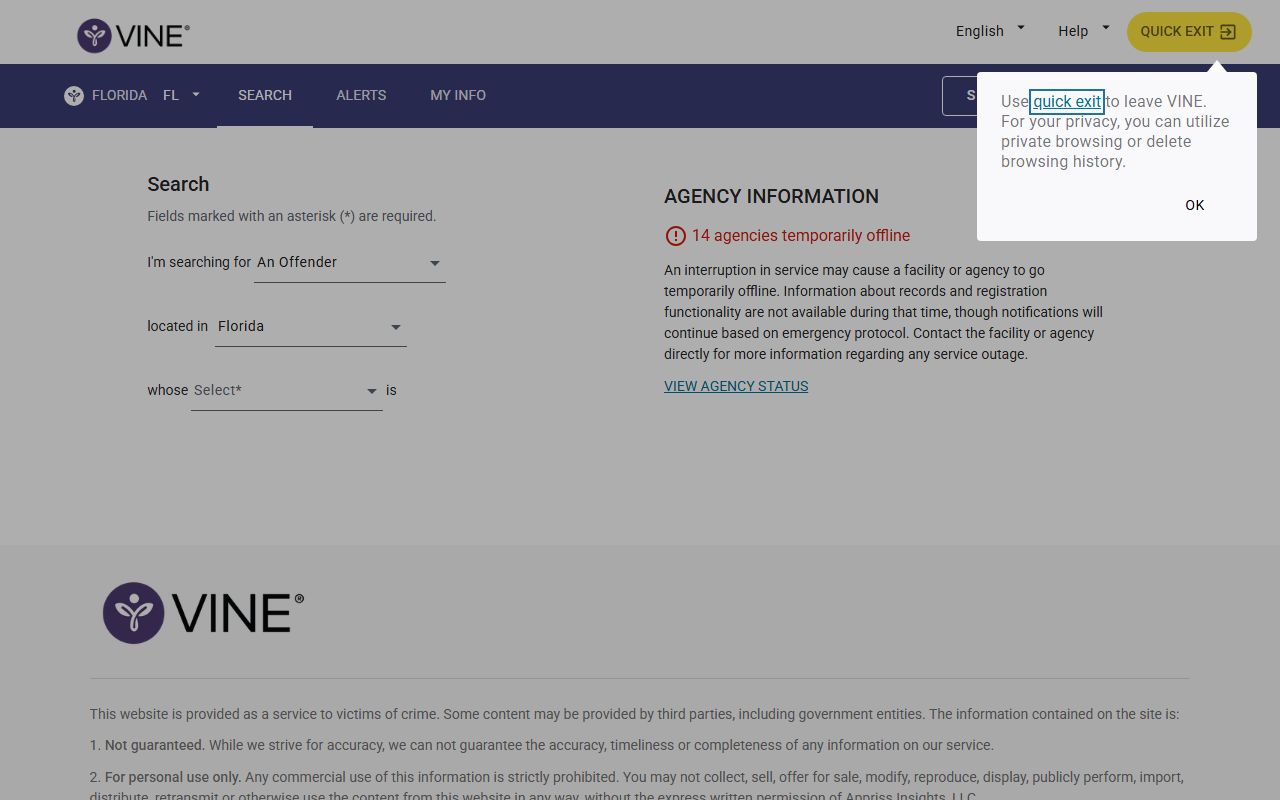
VINELink is useful for two reasons. First, you do not have to keep checking the roster by hand, since the alert comes to you. Second, it works across many Florida facilities, so it can follow a person who moves from the county jail to another agency. Registration is free, and you choose how you want to be reached. Sign up through VINELink Florida shown above. Because it is an interactive app, the public fields are basic, as the table notes.
| Field Label | Type | Required | Notes / Format |
|---|---|---|---|
| State | Context | Yes | Florida page at the Person search route. |
| Person search | App form | Varies | Search by name within the app. |
| Notifications | App function | Optional | Register for custody status updates. |
Searching Florida DOC Released Inmates
When a person is sentenced to more than a year, they go to state prison under the Florida Department of Corrections. The FDC runs a free statewide search for current and former offenders sentenced to state prison or supervision. It is the right tool when a county case ends in a prison term.
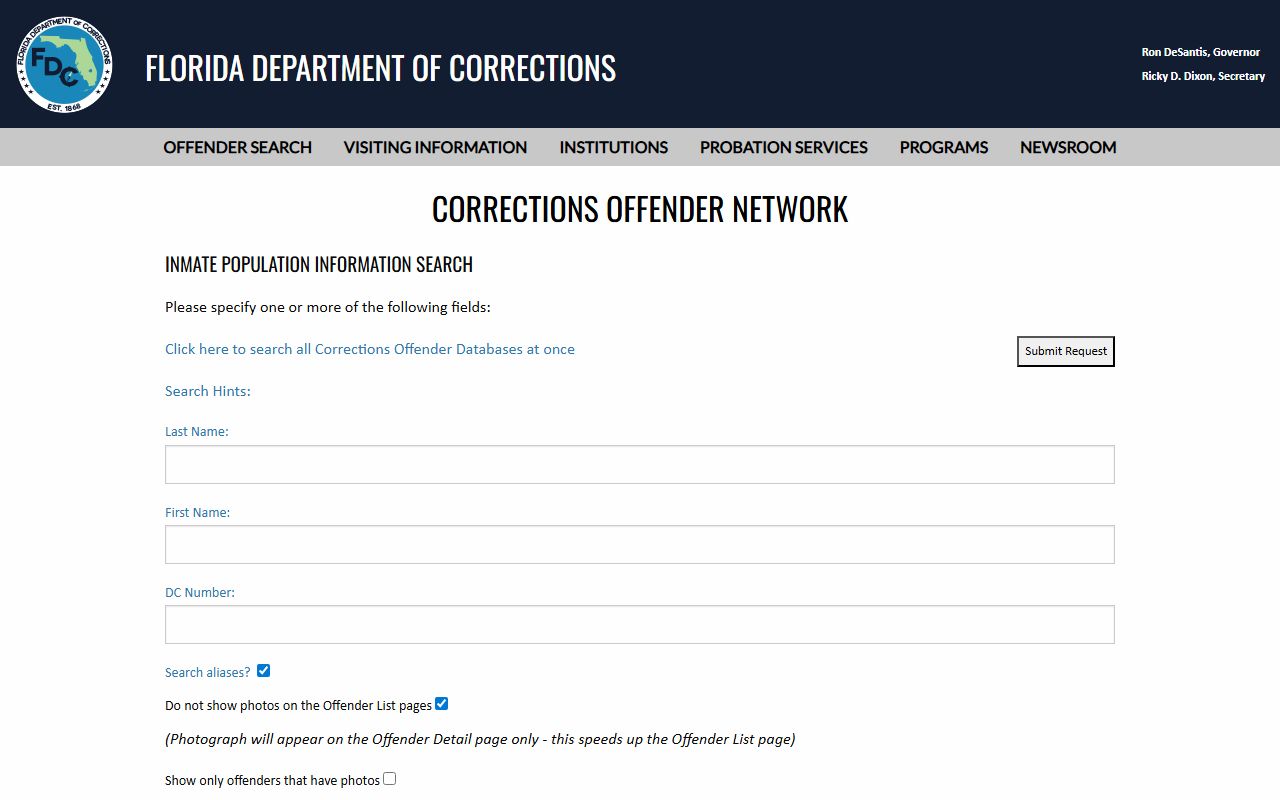
Search the Florida DOC offender search shown above by name or DC number. The fields are listed below.
| Field Label | Type | Required | Notes / Format |
|---|---|---|---|
| Last Name | Text | No | Returns names that begin with the letters typed. |
| First Name | Text | No | Returns names that begin with the letters typed. |
| DC Number | Text | No | Six characters, numeric or one letter plus five digits. |
| Search aliases | Checkbox | No | Includes aliases when checked. |
| Limit matches per page | Dropdown | No | 10 through 50 results per page. |
An FDC detail page lists a current release date, but warns it can change due to gain time or review. The detail page also shows the receipt date, the current facility, the custody level, aliases, and a sentence history with offense and county. It clearly states that it covers felony offenders sentenced to state prison or supervision and excludes county jail and county probation. The jail population page covers the FDC sample record fields in more depth.
Federal Bureau of Prisons Locator
A federal case routes to the Bureau of Prisons, not the county jail or state prison. The BOP runs a national inmate locator that is free to use. It covers federal inmates by number or by name.
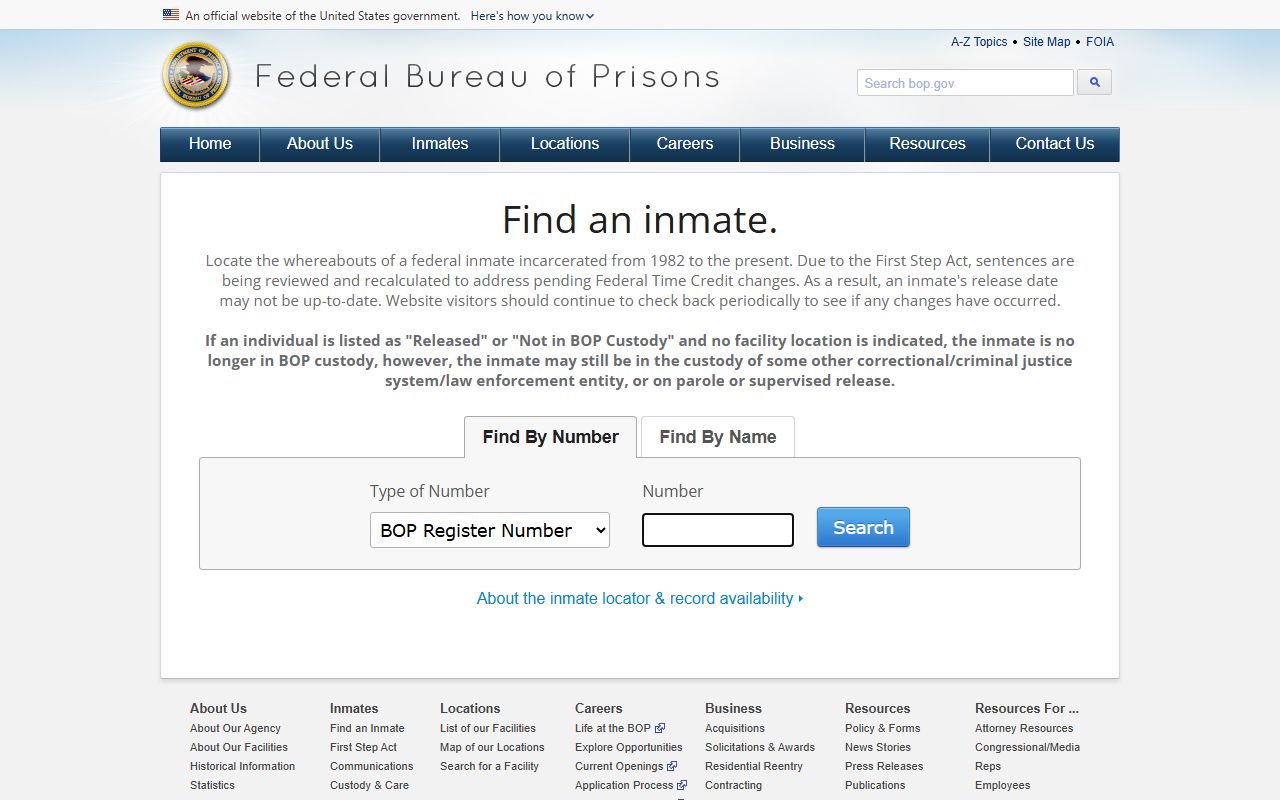
Use the BOP inmate locator shown above. It offers two search modes, listed below.
| Field Label | Type | Required | Notes / Format |
|---|---|---|---|
| Find by Number | Mode | No | BOP Register, DCDC, FBI, or INS number. |
| Find by Name | Mode | No | First, middle, last, plus optional race, age, sex. |
| Search | Button | N/A | Runs the federal search. |
Federal custody is fully separate from the county. The U.S. Marshals Service moves federal detainees, and local jail housing under agreement is possible but must be checked case by case. So a person on a federal charge may not show on the county roster at all. The BOP locator is the place to look once a person is in federal custody after sentencing.
Verifying Release in Person or by Phone
Sometimes the fastest answer is a phone call. The Department of the Jail at 352-491-4444 can speak to current custody status. For a person in state prison, the FDC search and its current-as-of date give a read, though the data can lag. Treat any online status as a starting point, not a guarantee, and confirm with the holding agency before you act on it.
This caution matters most when safety is involved. A release date can move, and an online record may not reflect the true current location. When timing matters, pair an alert with a direct call.
Phone verification has its limits too. Staff can confirm current custody but will not give legal advice or share protected details. For a victim with safety concerns, the State Attorney's victim services and VINELink are better channels than repeated calls. They are built to deliver status updates in a structured, reliable way, which reduces the chance of a missed change.
The Sex Offender Registry After Release
Some people must register after release. The Florida Department of Law Enforcement runs a public sexual offender and predator search. It lets you look up a person by name or search a neighborhood by address and radius. FDLE warns that registry data comes from many sources and that it does not independently confirm every item.
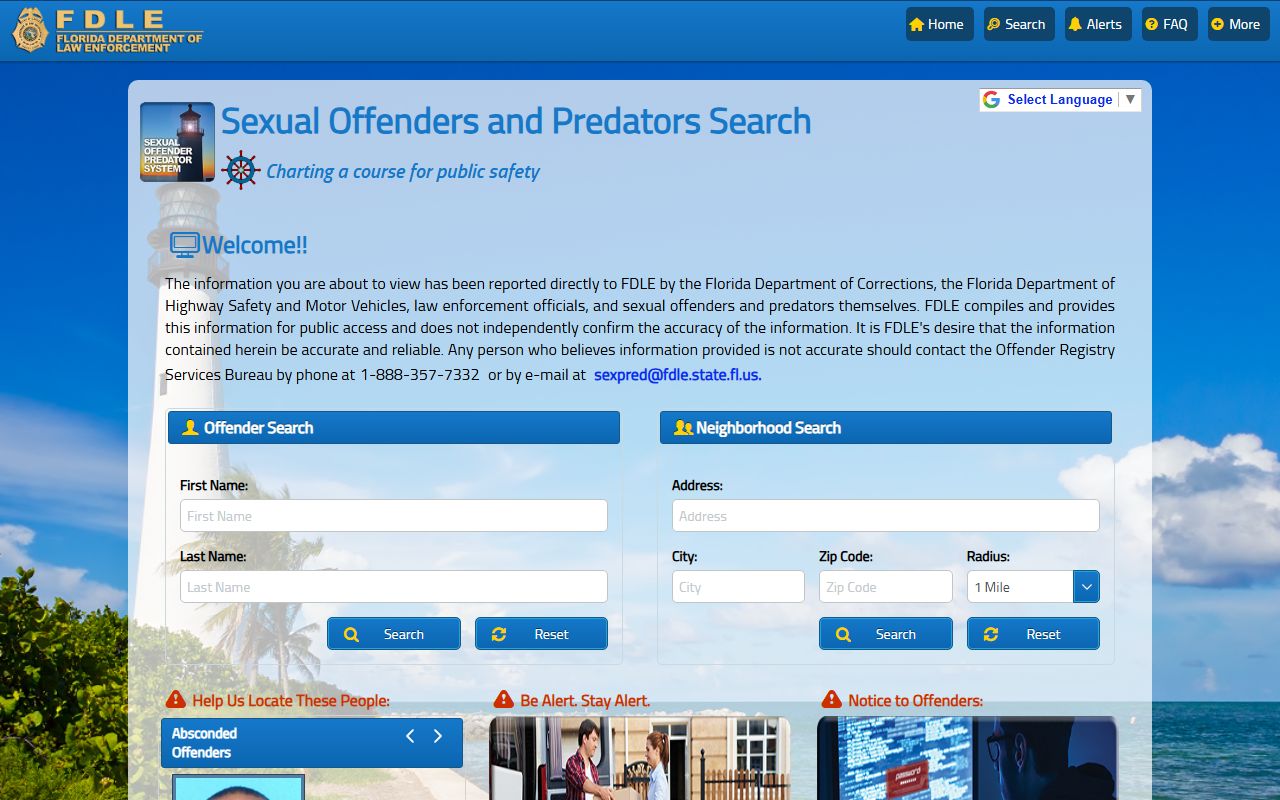
Search the FDLE registry shown above by name or neighborhood. The fields are listed below.
| Field Label | Type | Required | Notes / Format |
|---|---|---|---|
| First / Last Name | Text | No | Offender name search. |
| Address / City / Zip | Text | No | Neighborhood search by location. |
| Radius | Dropdown | No | From a quarter mile up to five miles. |
| Internet Identifier | Mode | No | Search by email or internet identifier. |
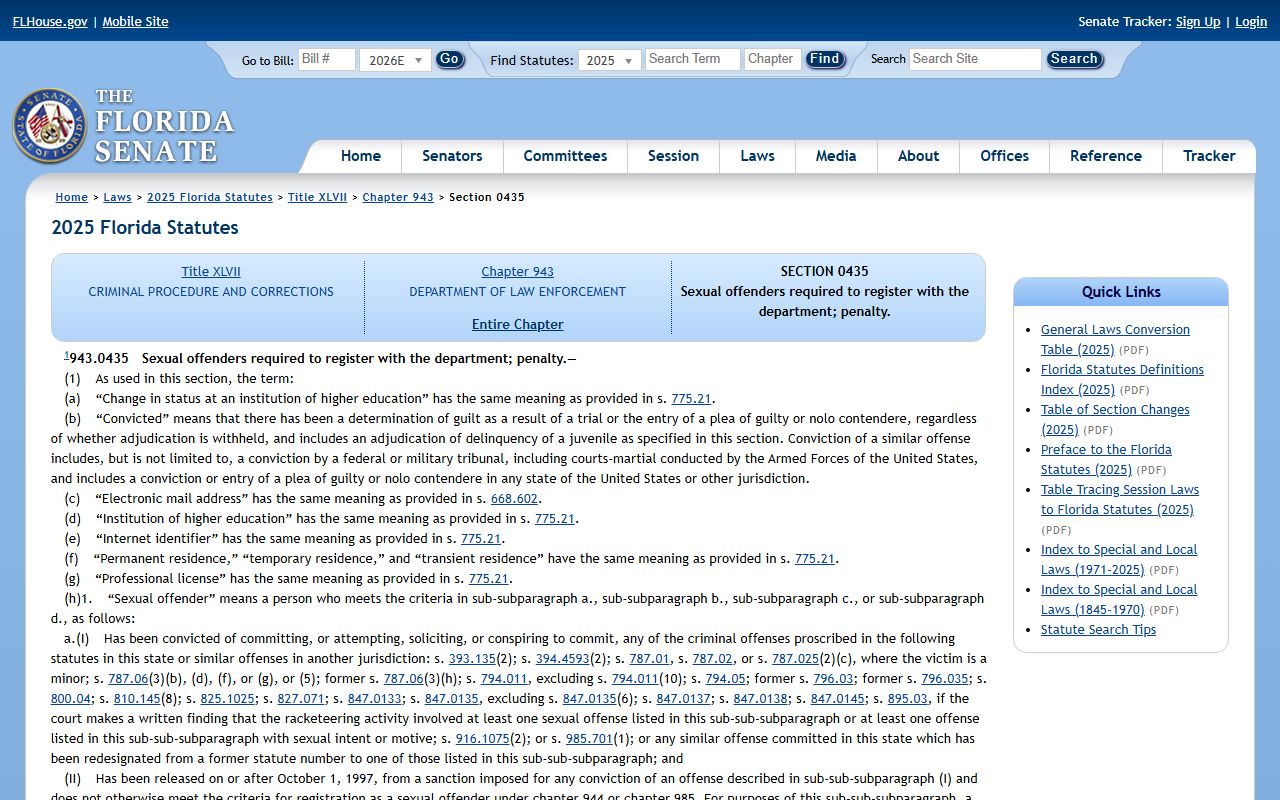
Registration duties come from Florida Statutes § 943.0435, shown below.
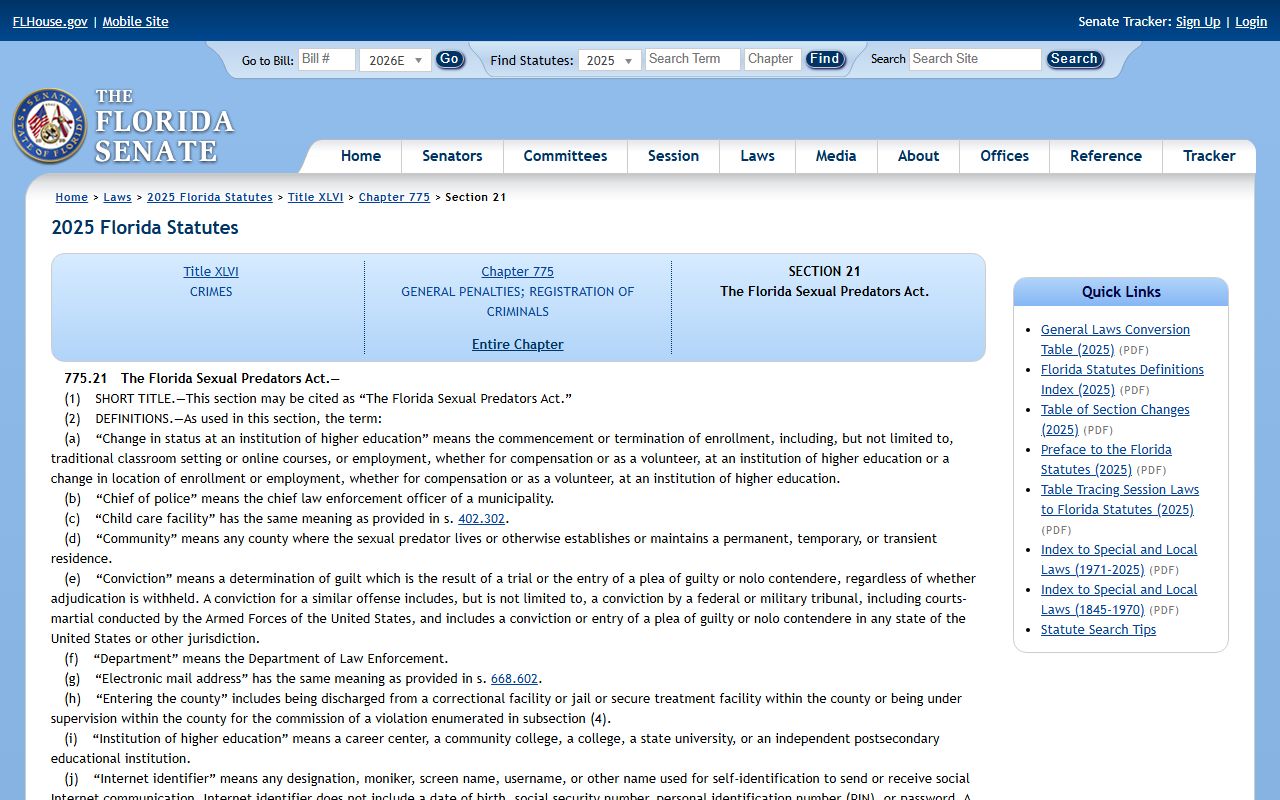
The predator classification comes from the Florida Sexual Predators Act, section 775.21, shown below.
The registry lists legal statuses such as Absconded, Confinement, and Released - Subject to Registration, along with supervised statuses. These help you read a record without guessing at its meaning. The search also marks transient offenders and predators with icons, and it offers a separate university or campus search mode. Because FDLE relies on reported data, treat the registry as a guide and verify anything critical with law enforcement.
Parole and Probation Information
Many people leave custody onto supervision rather than a clean release. Probation is community supervision ordered by the court. State supervision after prison runs through the FDC. The FDC search can show whether a former inmate is under supervision, since its records cover both prison and supervision for state offenders. Local probation for county cases runs through Alachua County Court Services.
Supervision comes with conditions, and a violation can send a person back to court or custody. So a person can be released yet still tied to the system. The court records search can show probation orders and any violation filings tied to the case.
Parole in the older sense is rare in Florida, since the state moved away from it for most offenses decades ago. Most state offenders serve a set term with gain time rather than parole. That is why the FDC release date matters so much, and why it carries a warning that it can shift. For county cases, probation is the more common form of supervision, and it runs locally rather than through a parole board.
Victim Notification and Rights
Victims have a right to information about a case and a defendant's status. The State Attorney's Office for the Eighth Judicial Circuit runs a victim notification service alongside VINELink. It keeps victims informed about case events and custody changes.
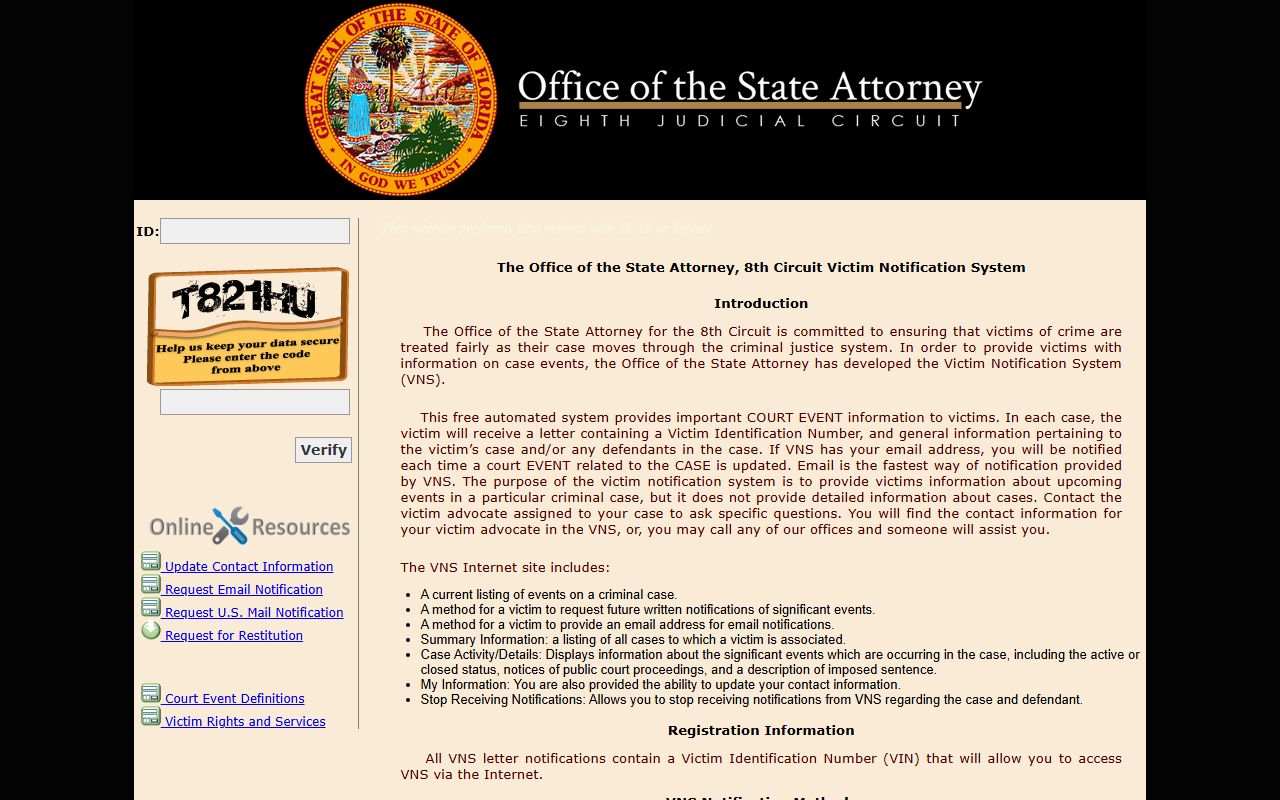
The victim notification service shown above pairs with VINELink for custody alerts. A victim can use both to stay informed about release and court dates, which is especially important around a bond hearing or a release.
Reentry and Civil Rights Restoration
Release is the start of reentry. Local resources include Alachua County Court Services, the specialty courts, the Public Defender, and FDC reentry programs. The Veterans Treatment Court connects eligible veterans with VA resources. These help a person find footing after custody, though some programs have eligibility limits. Court Services and the specialty courts can point a person toward treatment, job help, and supervision support during the transition.
Civil rights can also be at stake. The State Attorney's Office posts a voting rights restoration page. Florida's rules on restoring felony voting rights have changed over the years, so a person should check current state guidance before relying on any single source. Restoration is not automatic in every case, and the details can turn on the offense and any outstanding obligations. The safest path is to confirm eligibility with current state elections and clemency guidance rather than older summaries.
Note: Online release and supervision data can lag real life, so confirm status with the holding agency before you rely on it.