
Probate Venue in Alachua County
Probate is the court-supervised process of settling a person's estate after death. The estate's assets pass to heirs or beneficiaries, and valid debts to creditors are paid, all under court oversight. In Florida, probate is not a stand-alone court. It runs through the Probate Division of the Circuit Court, and the Clerk handles the filings at the Family and Civil Justice Center, 201 East University Avenue. The Clerk's probate page explains the process and points users to forms and checklists.
Venue decides where to file. A probate petition is filed in the county where the person who died resided. If that person was not a Florida resident, the petition is filed where their Florida real property sits. So an Alachua County resident's estate is filed here, through the local Clerk. Getting venue right at the start avoids a transfer or a dismissal later, which can delay an already difficult process for a family.
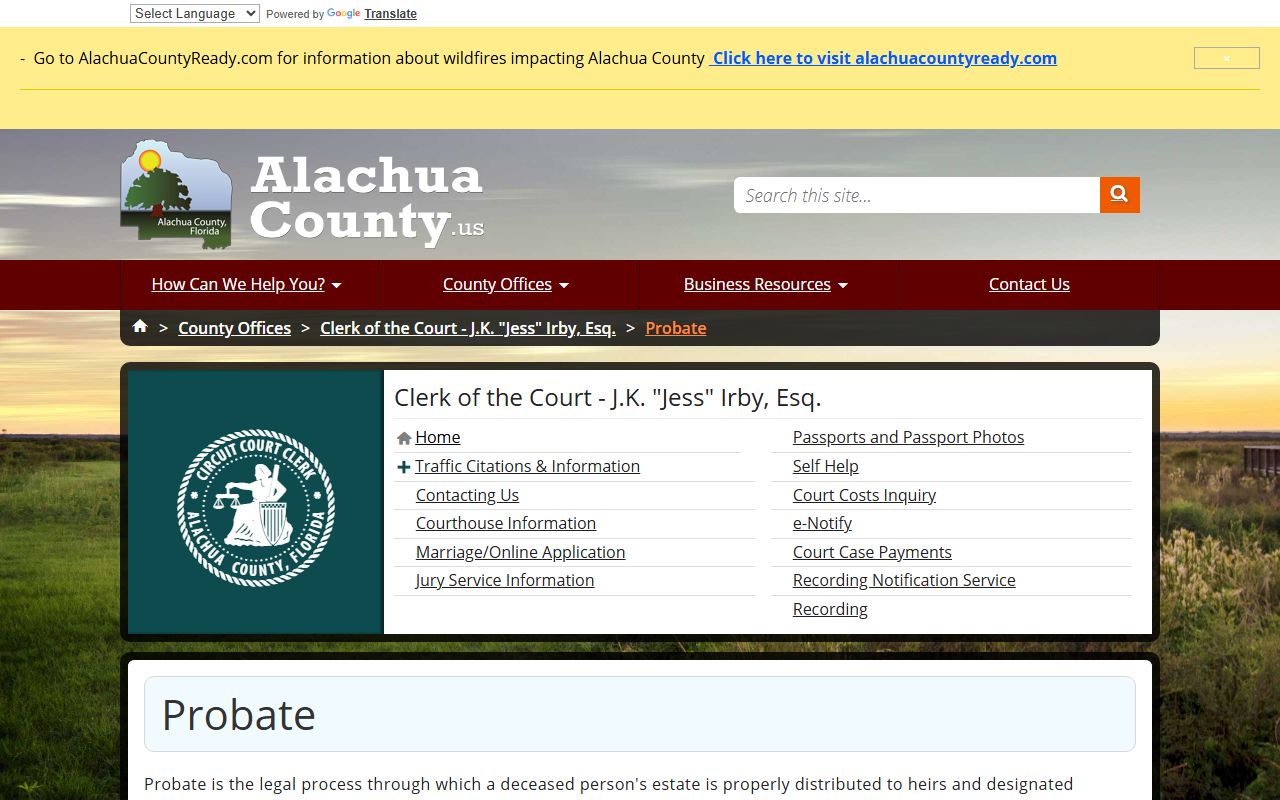
The Clerk's probate page shown above describes venue, proceeding types, and will deposit. The probate division contact is below.
Probate Division
Clerk of the Court & Comptroller
Family & Civil Justice Center
201 East University Avenue
Gainesville, FL 32601
352-374-3682
Types of Alachua County Probate Proceedings
Florida offers more than one path through probate, and the right one depends on the estate. The Clerk lists three main proceeding types. Formal administration is used when an estate has considerable assets or needs a personal representative to act for it. Summary administration is used for smaller or simpler estates that qualify under the Florida Probate Code. Disposition of personal property without administration is a limited path used to reimburse certain expenses.
Choosing the path matters because it changes the fee and the steps. A large estate usually needs formal administration and a personal representative with letters of administration. A small estate may close faster through summary administration. Since the Clerk cannot advise which path fits, many families consult an attorney before filing.
The Clerk also points users to Eighth Circuit forms and checklists rather than handing out every probate form. That is because formal estate administration can involve creditor notices, homestead questions, personal representative duties, inventories, and accountings. Each of those steps has its own rules. A simple summary case may need only a few documents, while a complex estate can run for months. Knowing which path applies early saves both time and filing fees later.
Filing a Will in Alachua County
When a person dies, the original will is deposited with the Clerk. The Clerk's page states there is no fee to file a will, but there is a $7.00 fee to issue a receipt for the will. Depositing the will is a separate step from opening probate. The will is the document that names a personal representative and directs how the estate should pass, so it anchors the case once probate begins.
If a person dies without a will, the estate is called intestate, and Florida law decides who inherits. Either way, the estate still goes through the Probate Division, and the same venue rules apply. The Clerk also discusses heirs property and links a county brochure on the topic, which matters when family land passes without a clear estate plan. Depositing the will promptly helps, since the original document is needed to admit it to probate.
Searching Alachua County Probate Records
Probate cases are searched through the Clerk's main court records system, the same tool used for other case types. The case-type code for probate, guardianship, trusts, and wills is CP, so a case number reads like 1999CP1234. Search by the decedent or estate name, or by the case number if you have it. Some probate document images may be limited under the Florida Probate Rules, Rule 2.420, and the court-file confidentiality statute.
An expected probate record includes the case number, the decedent or estate name, the filing date, the CP case type, the judge, the personal representative, the attorney, docket entries, and any inventory or accounting references. The court records page explains the full search fields that also apply to probate. As with other cases, the case index reaches back many years, but document images and older closed files may need a trip to the Records Department. The online entry point is gated by a CAPTCHA, like the rest of the court records search.
Alachua County Probate Fees
Probate filing fees vary by proceeding type and estate value. Guardianship adds its own filing fees, and annual accountings can carry separate audit fees based on the estate's size. The table lists the main probate and guardianship fees from the Clerk's schedule.
| Service | Fee |
|---|---|
| Formal administration | $400.00 |
| Summary administration, estate over $1,000 | $345.00 |
| Summary administration, estate under $1,000 | $235.00 |
| Caveat | $41.00 |
| Guardianship of person and property | $400.00 |
| Petition for determination of incapacity | $231.00 |
| Issue a receipt for a will | $7.00 |
Audit fees for annual accountings rise with the estate value, from $20 for smaller accountings up to $250 for the largest. So a guardianship is rarely just one filing fee. A filer who cannot afford the fee may ask about civil indigent status, which the Clerk reviews under Florida law. Other probate filings, such as a notice of trust, carry their own smaller fees on the schedule.
Guardianship and Incapacity
Guardianship is part of the probate division's work. It applies when a person, called a ward, cannot manage their own affairs and a court appoints someone to act for them. The process can begin with a petition to determine incapacity. Once a guardian is appointed, Florida requires plans, inventories, and annual accountings that the court reviews. The Clerk's guardianship page links the forms and checklists for these steps.
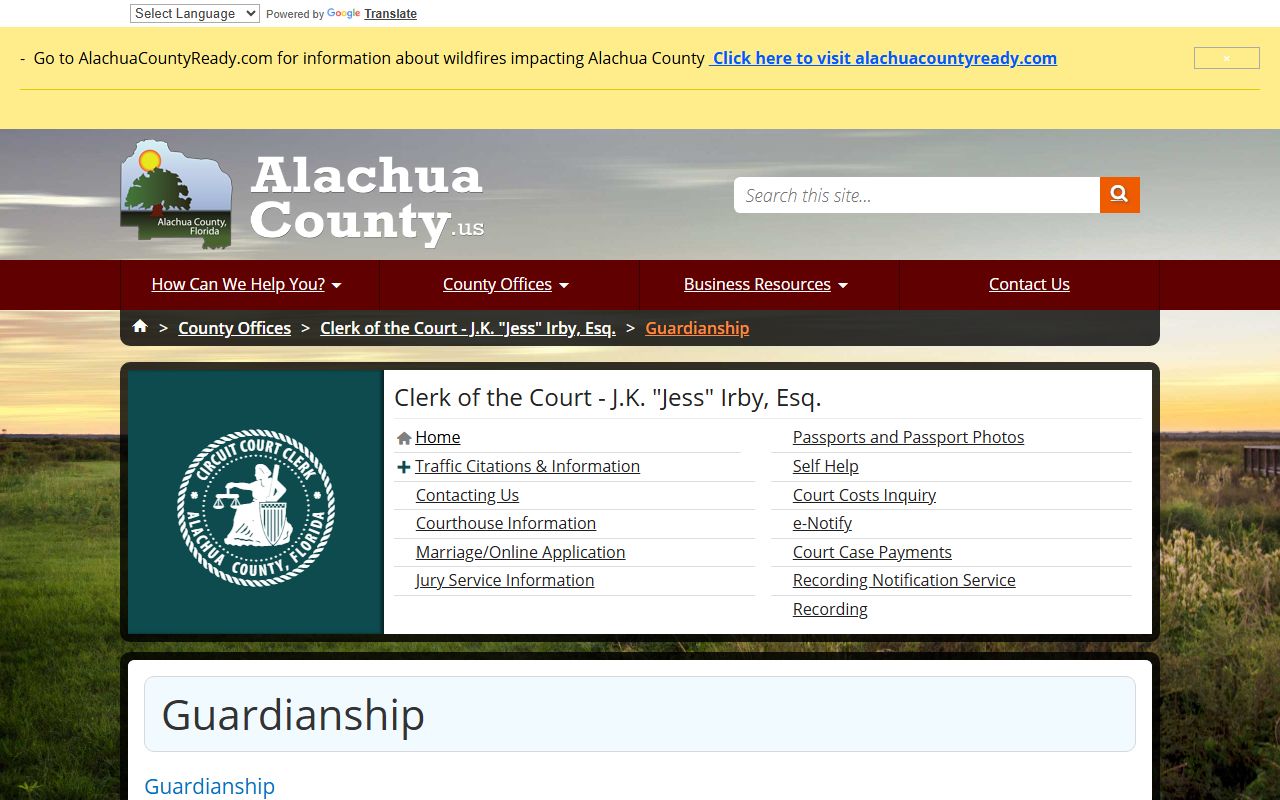
The Clerk's guardianship page shown above references the initial plan, the annual plan, and other guardianship forms. Because guardianship involves ongoing court oversight, many families use an attorney to keep the filings on track. Missing an annual plan or accounting can trigger court action, so the calendar matters as much as the first petition. The Clerk processes these filings but does not advise on guardian duties.
Confidential Probate Information
Not every probate-related record is open. Adoption records are confidential under Florida law, and a probate or family file connected to an adoption will not show those documents to the public.
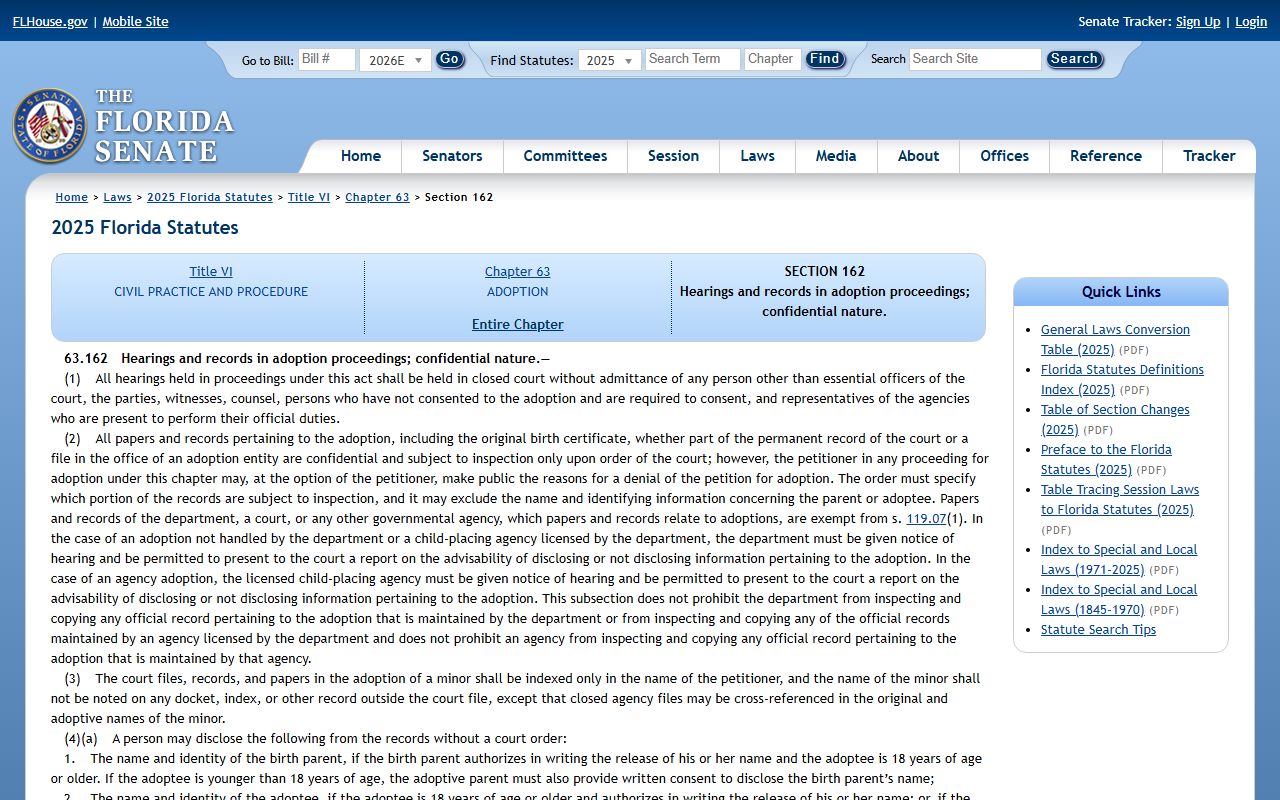
Adoption confidentiality comes from Florida Statutes § 63.162 shown above. Mental health clinical records are also protected, which matters for guardianship and incapacity matters tied to mental health.
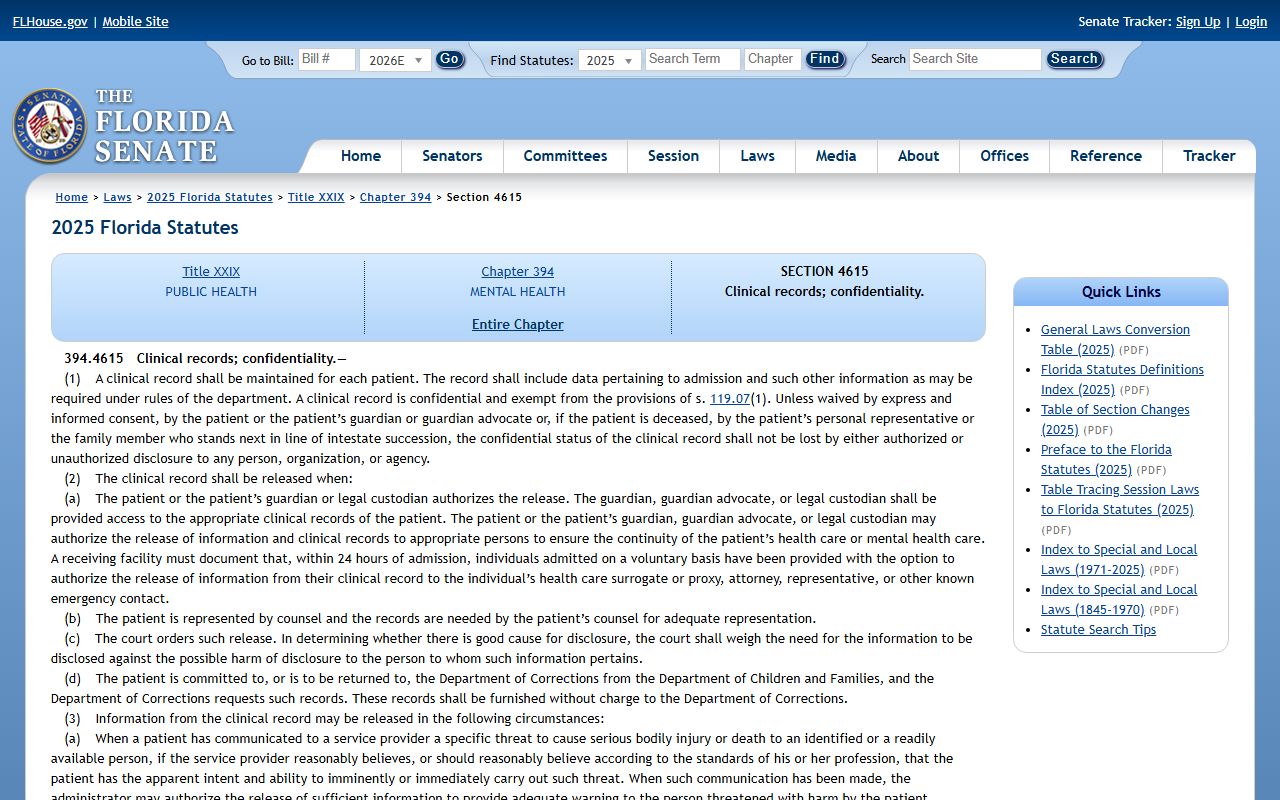
Mental health clinical records are confidential under Florida Statutes § 394.4615 shown above. So a guardianship file may show the case while keeping medical details sealed. The public can see that a matter exists without seeing protected health or adoption information, which balances open courts with personal privacy.
Alachua County Probate Terms
Probate uses words that confuse many families. A short glossary helps when you read an estate or guardianship file. The list below defines the terms that come up most often.
- Testator
- A person who makes a will.
- Personal Representative
- The person who administers the estate; many states call this an executor.
- Intestate
- Dying without a valid will, so state law decides who inherits.
- Guardianship
- A court arrangement where a guardian acts for a person who cannot.
- Conservatorship
- Management of another's affairs; Florida usually uses the term guardian.
- Caveat
- A filing that asks to be notified before the court acts on an estate.
Step-by-Step Estate Process
An estate moves through a set sequence in Alachua County. The exact steps depend on the proceeding type, but the outline below shows the common path the Clerk's resources describe.
- Identify venue: the decedent's home county, or the Florida real-property county for a non-resident.
- Choose the proceeding: formal, summary, or disposition without administration.
- Prepare the petition and required Florida Probate forms.
- File with the Clerk and pay the applicable fee.
- The court assigns a CP case number and a division.
- For formal administration, the court appoints a personal representative.
- Serve notices to creditors and interested persons as the Probate Code requires.
- File inventory and accounting, resolve claims, then close the estate by order.