
Florida Public Records Law in Alachua County
Florida's public records law starts from a simple idea. Government records belong to the public. Chapter 119 of the Florida Statutes says state, county, and city records are open for any person to inspect and copy, and that giving access is the agency's duty. The law also covers electronic records, telling agencies to provide reasonable electronic access and to strive for remote access when it is feasible. That is why Alachua County offers free online indexes while still requiring in-person research for some older or restricted files.
The screenshot shows the general public records policy statute.
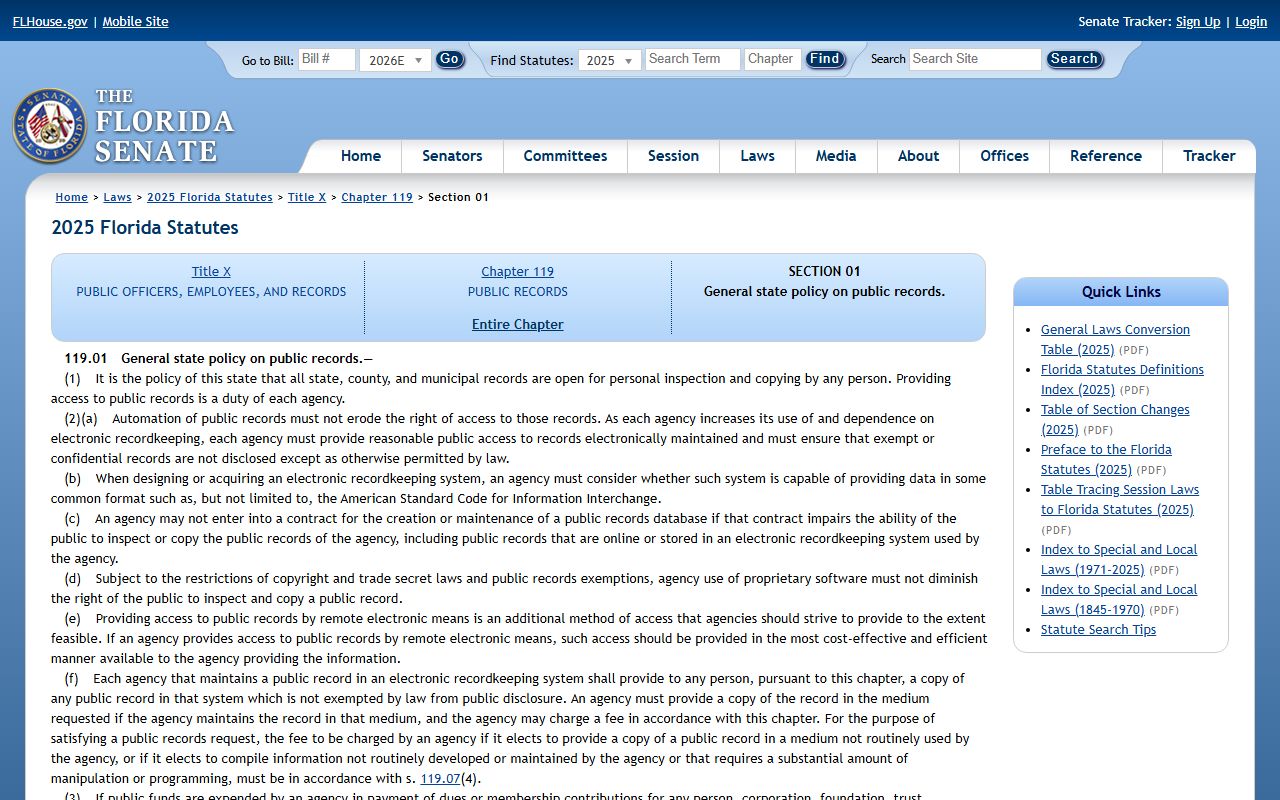
The general policy comes from Florida Statutes § 119.01 shown above. It sets the open-by-default rule that the county follows. The same statute makes clear that automation should not erode access, so moving records online is meant to widen access, not limit it. That principle explains why the Clerk can offer free online indexes while still pointing people to in-person research for the oldest or most sensitive files. Open access is the rule, and an exemption is the exception that must be grounded in law.
Clerk Records vs County Government Records
Many requests go to the wrong office, which wastes time. The Clerk of the Court and Comptroller holds court records, official records, recording, marriage, probate, and traffic citation records. The Alachua County Board of County Commissioners holds records for county departments, which is a separate custodian. Constitutional offices such as the Property Appraiser, Tax Collector, Supervisor of Elections, and the Sheriff hold their own records too. So a court-record seeker should go to the Clerk, not the county commission.
The county designates its own public records custodian for commission departments. The screenshot shows the county's public records request page.
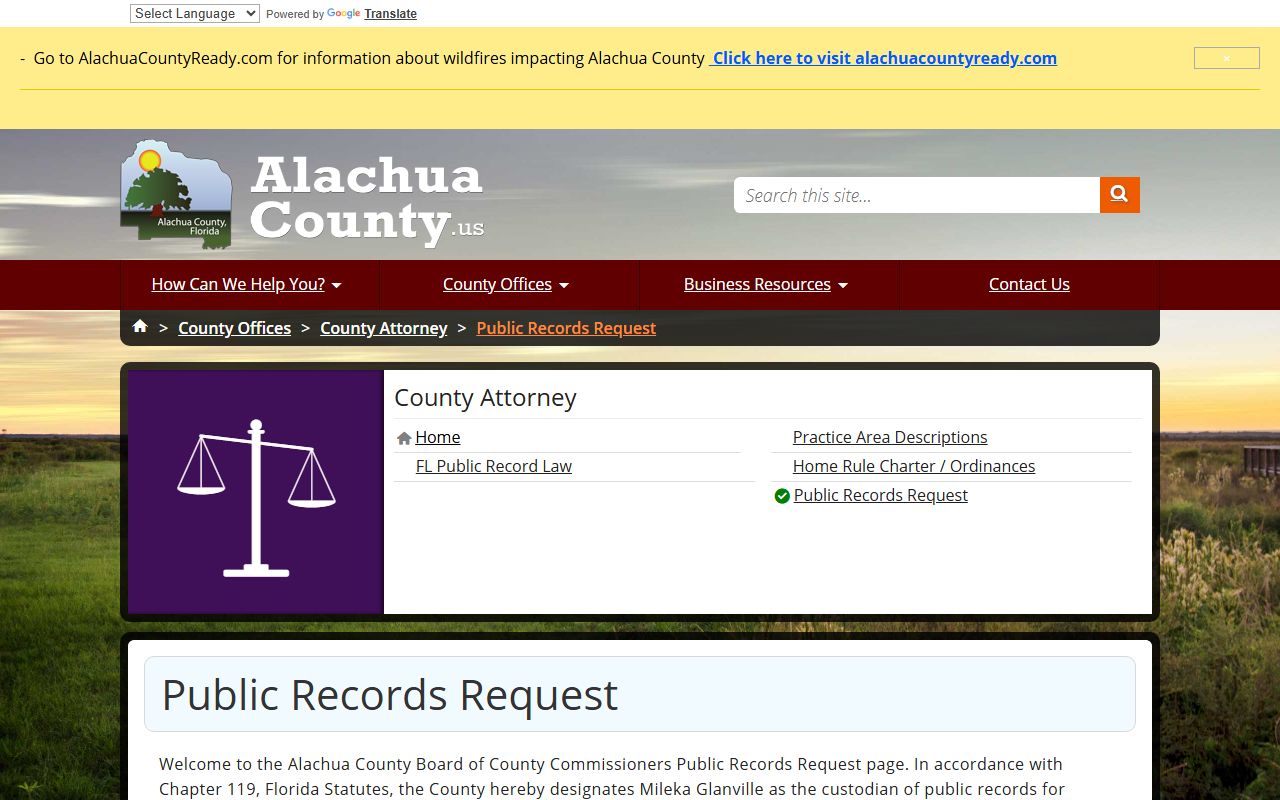
The county public records request page shown above is for commission department records, not court records. Florida law does not require a requester to identify themselves or to ask in writing, so anonymous requests are allowed. The county lists a portal, mail, in-person, phone, and email options, and it names a public records coordinator for commission departments. So before you send a request, match the record to its keeper. A court file goes to the Clerk, a jail record goes to the Sheriff, and a county budget or contract goes to the county commission.
How to Request Alachua County Clerk Records
If the record you want is in the Clerk's custody, the request is straightforward. Court and official record copies are available by email or mail, and many records are searchable online first. The Clerk's public records request page lists the methods and the copy costs. The office can pull files, make copies, and process payments, but it cannot give legal advice on a case.
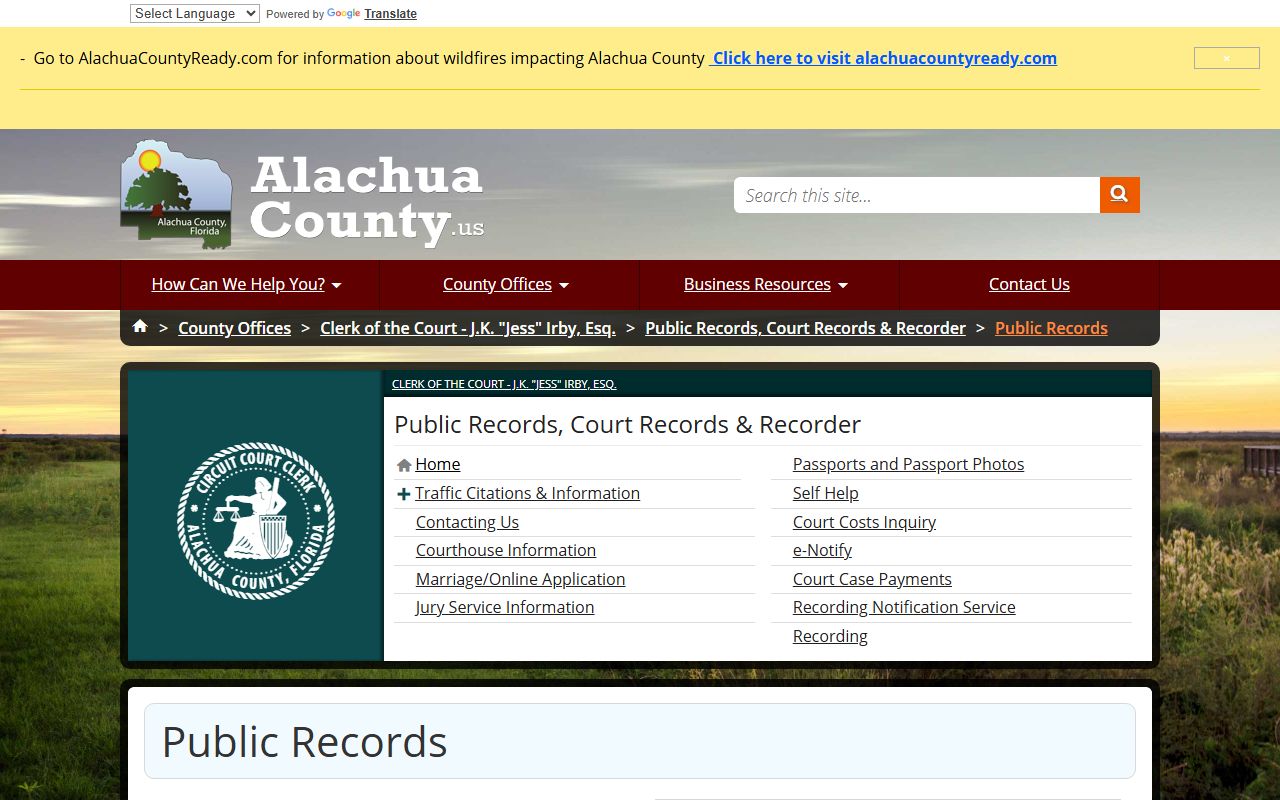
The Clerk's public records request page shown above explains the request methods. The steps below outline a clean request.
- Decide which office holds the record: Clerk, county commission, or Sheriff.
- Check the online index first, since many records are free to view.
- For a Clerk record, email osr@alachuaclerk.org or mail the Public Records Custodian.
- Describe the record clearly, with names, case numbers, or dates.
- Pay the copy fee, then receive the copies or certified copies.
Alachua County Public Records Fees
Fees follow Florida law and the Clerk's schedule. Court and official record copies cost more than plain administrative copies. Certified copies add a per-document charge. The inspection and copying statute lets an agency charge a special service charge when a request needs extensive clerical or technology work, though that does not apply to a routine request.
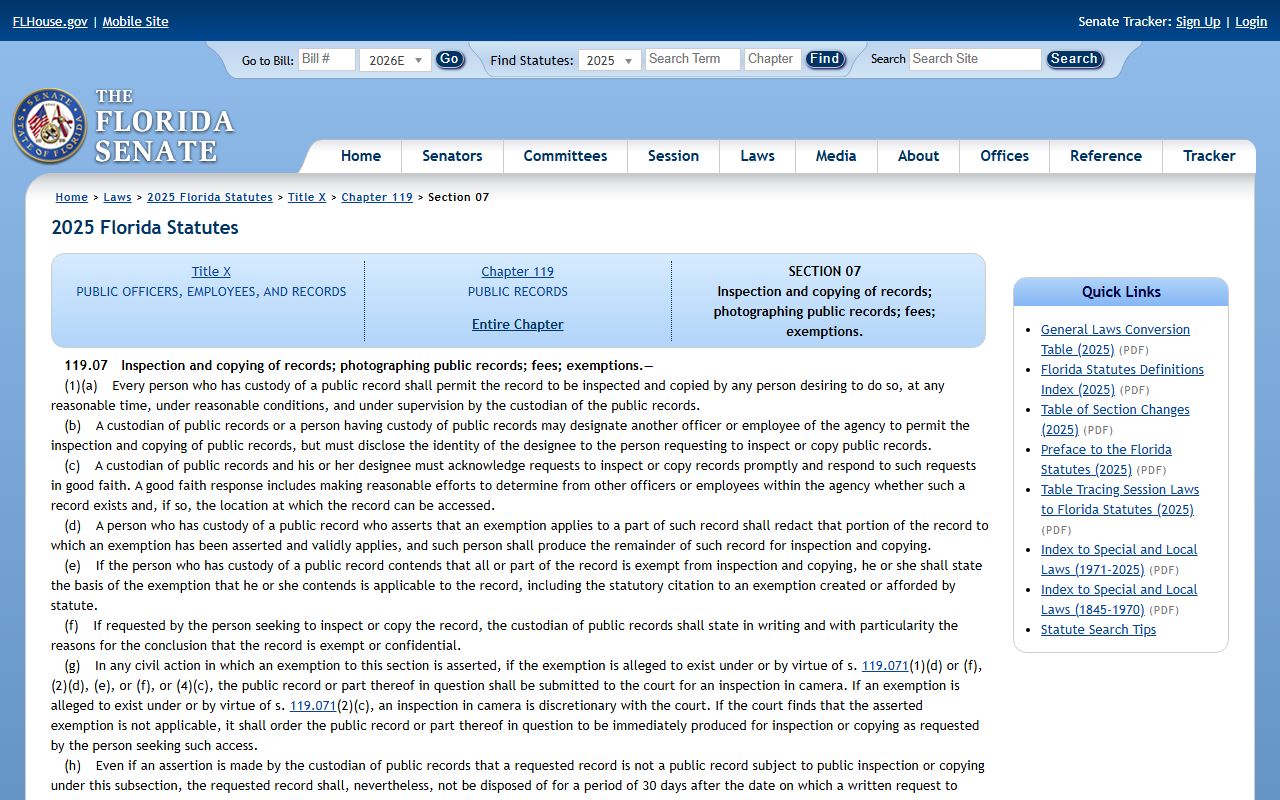
The request and fee rules come from Florida Statutes § 119.07 shown above. The table lists common copy fees.
| Item | Fee |
|---|---|
| Court or official record copy, per page | $1.00 |
| Administrative record copy, per page | $0.15 |
| Certified copy, per document | $2.00 added |
| Records search, per year per name | $2.00 |
Official Records and Recording Search
The Clerk is also the county recorder. Official records include deeds, mortgages, liens, plats, and other recorded documents. Non-confidential official records are open to the public, and most are online, though older records may be indexed without an image. The Clerk's Official Records portal offers a search, a recording notification service, and recorded plat and subdivision indexes.
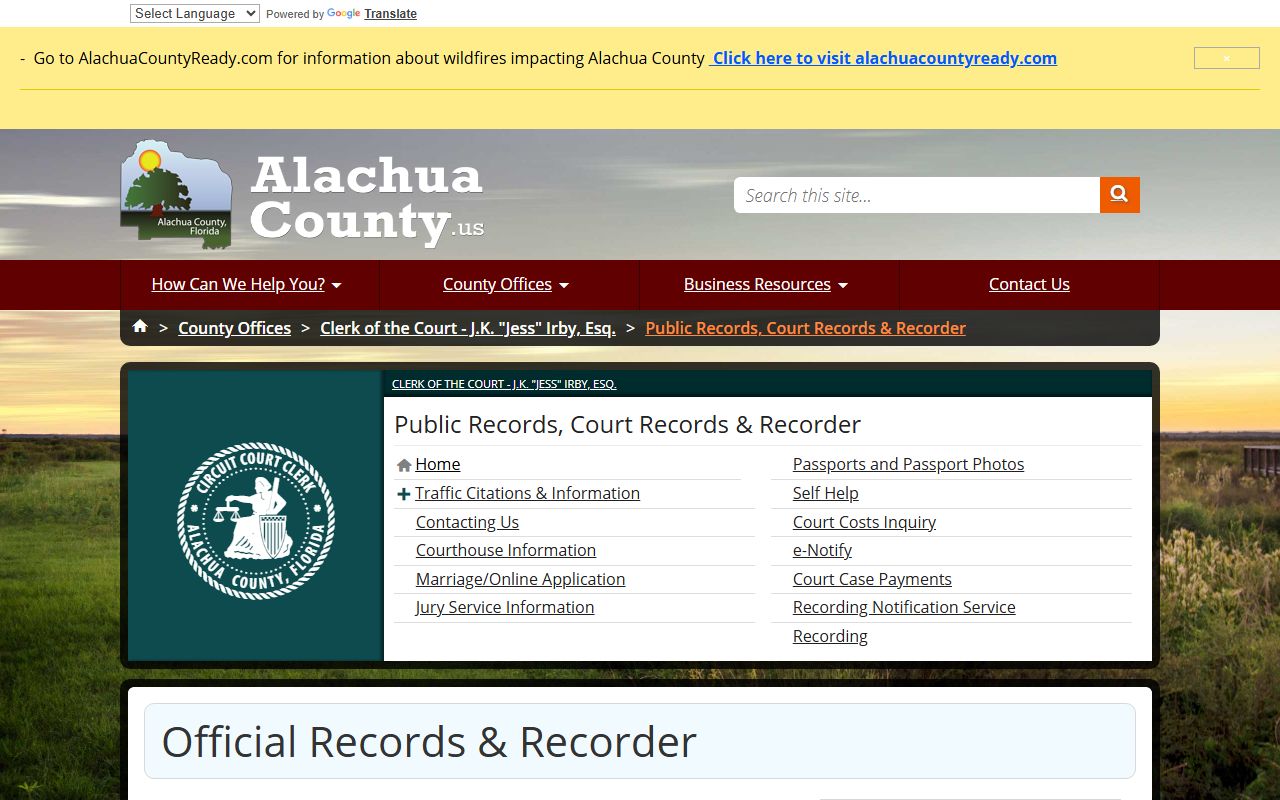
The official records and recorder page shown above lists the search tools and copy options. Copies and certified copies can be bought online, in person, or by phone with a card. A Social Security number exemption applies to recorded documents, so a person preparing a document for recording should not include a Social Security number unless the law requires it. The page also offers index books going back decades and a recording notification service that can alert a property owner to a new filing.
Court Records Through the Clerk
Court records are a major part of the Clerk's public records. They are searched through the Clerk's online court records system, which is gated by a CAPTCHA and covers civil, criminal, family, probate, and traffic cases. Online document images start in 2001 for civil and 2005 for criminal, with older files at the Records Department.
Because court files follow extra rules, some images are blocked even when the case shows. The court records page covers the search fields and case-type codes, and the court dockets page covers reading case events.
Exemptions and Confidential Records
Open by default does not mean everything is open. Florida law lists many exemptions, and some records stay confidential. The general exemptions statute covers agency security, active criminal investigative information, victim and witness details, and personal identifying information. These matter for sheriff, jail, warrant, and county records.
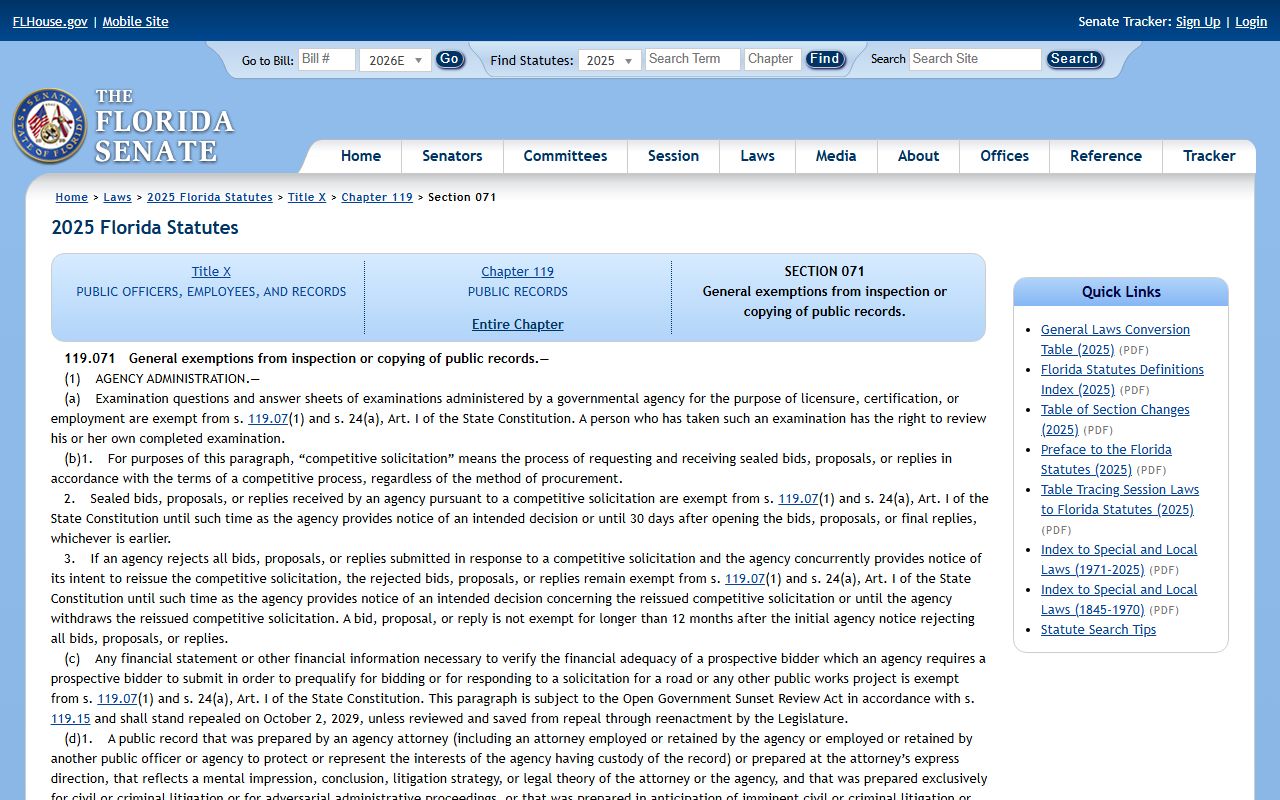
The general exemptions come from Florida Statutes § 119.071 shown above. Court files have their own confidentiality and redaction rules under section 119.0714, covered on the court records page. An exemption usually has a clear reason behind it, such as protecting a victim or an active investigation. When an agency withholds a record, it should point to the law that allows it. A requester who is denied a non-court record has remedies under Chapter 119, including court enforcement and, in some cases, attorney fees.
Filing Fees and Clerk Service Charges
Opening a case is different from copying a record. New cases carry filing fees set by statute, and the Clerk charges service fees for copies, certified copies, searches, and recording. A civil filing, a dissolution, or a foreclosure each has its own fee. These charges are authorized by Florida law, not set at random by the office, and the schedule shows the date it took effect.
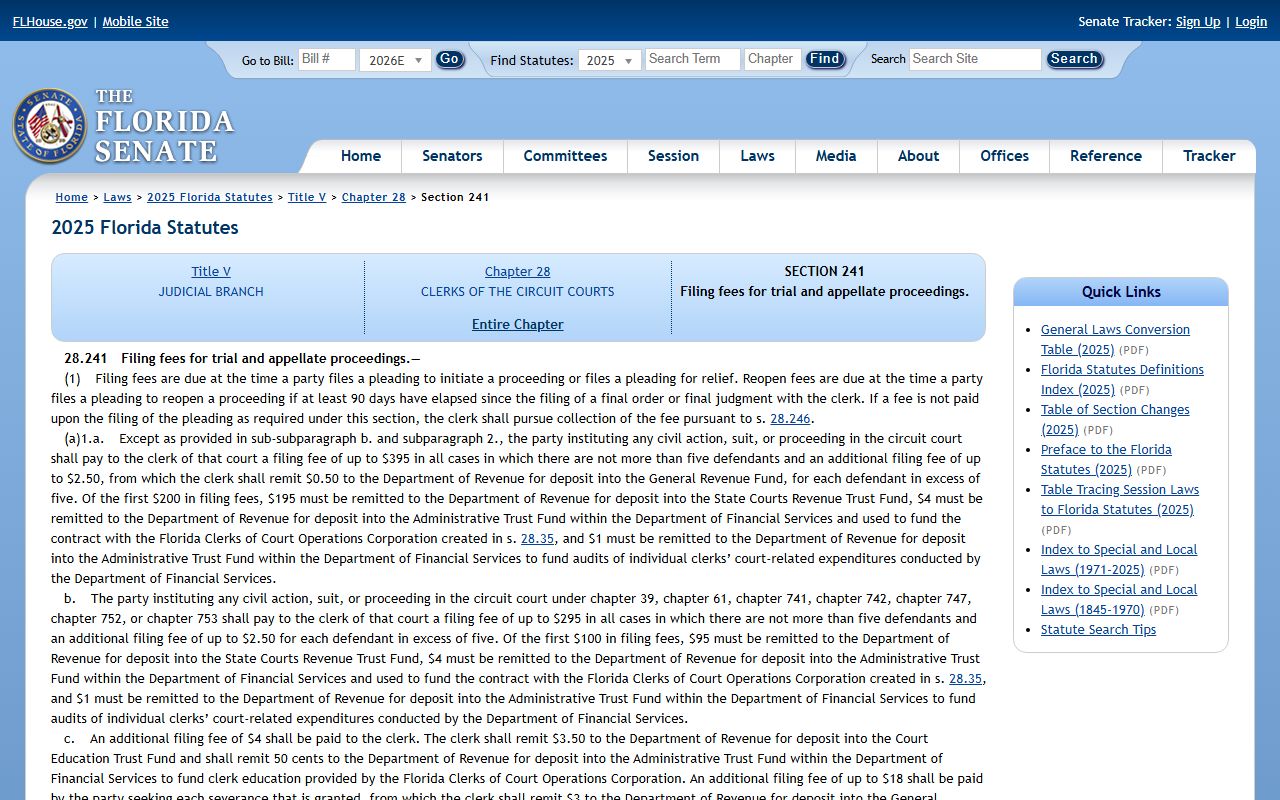
Civil filing fees come from Florida Statutes § 28.241 shown above. The Clerk of the Court & Comptroller page details copy and recording fees under the related service-charge statute.
Redaction and Removal Requests
Some personal numbers can be removed from a court or official record. The holder of a Social Security number or a complete bank, debit, charge, or credit-card number, or that person's attorney or legal guardian, may ask the Clerk to redact it from a court file. There are also forms to remove certain images from a public website, such as a military discharge or a death certificate.
The redaction request identifies the case, the document, the page, and the type of number. Copies of a record may already have been shared before a redaction, so the request is forward-looking. The Clerk processes these requests but cannot give legal advice on them. The requester is responsible for telling the Clerk about any other documents that should also be redacted, since the office does not hunt through a whole file on its own. Acting early helps, because a number that is already public in a copy cannot be pulled back once it is out.
Email Addresses Are Public Records
Florida law has a twist that surprises many people. Email addresses sent to a public agency can themselves be public records. So if you email the Clerk or the county, your email address may be released in response to a public records request.
Note: If you do not want your email address released, contact the office by phone or in writing instead of sending an email.